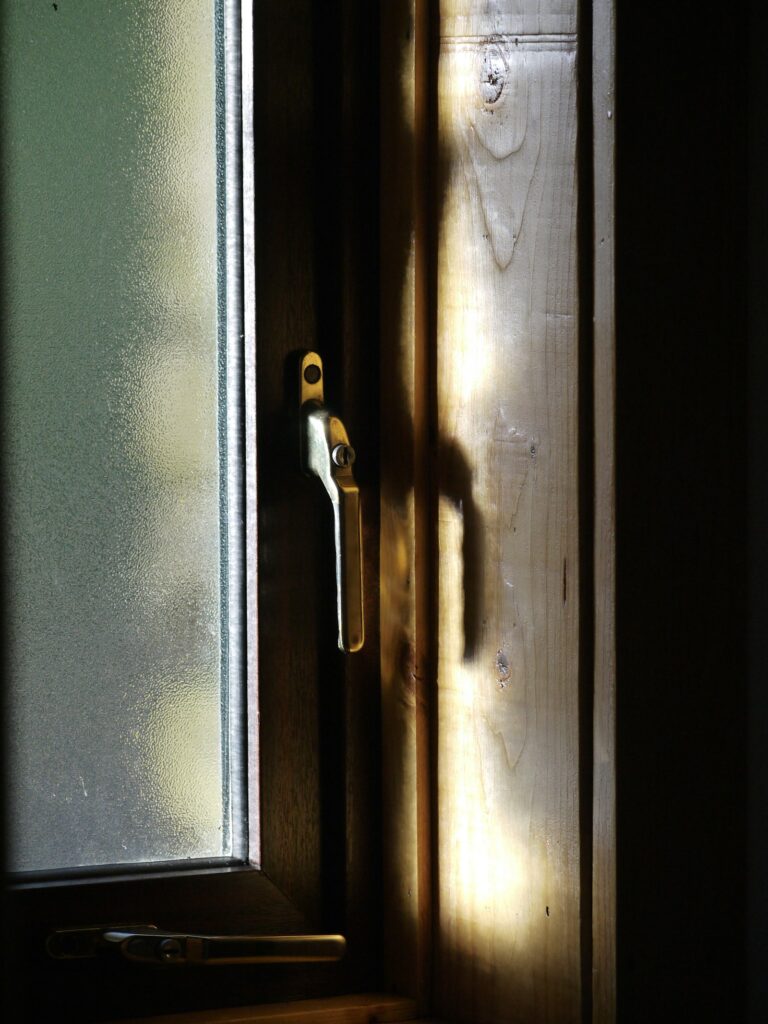
Most sash windows rely on a single catch at the meeting rails, which is easy to force and does nothing to stop a child opening the window. Fitting proper sash window locks, stops or restrictors is cheap, quick and makes a big difference to security and safety. This guide explains the main types, which to choose and how to fit them without damaging old timber.
The main types of sash window lock
| Type | How it works | Best for |
|---|---|---|
| Fitch or cam fastener | The traditional catch that pulls the meeting rails together | Closing the window tight; not real security on its own |
| Dual screw (sash bolt) | A threaded bolt passes through both meeting rails and is wound in with a key | Simple, strong security |
| Keyed fastener | A fastener with a lockable cam | Upgrading the existing catch |
| Sash stop | A small bolt in the frame that stops the sash opening more than a set distance | Ventilation with security |
| Window restrictor | A cable or arm limiting the opening, usually to 100mm | Child safety, upper floors |
| Spring or push lock | A surface-mounted lock that clicks shut | Quick fitting, low cost |
Security or child safety?
For security, the aim is to stop the sashes being forced apart or slid open from outside. Fit two locks per window on larger sashes, one near each side, rather than relying on a single central catch. Dual screws and keyed locks are the most common choice.
For child safety, the aim is to stop a window opening wide enough for a child to fall through. Restrictors or sash stops that limit the opening to around 100mm are widely used, especially on first-floor rooms and above. Make sure they can be released quickly by an adult in an emergency.
For both, sash stops are useful: they let you leave the window slightly open for air while stopping it opening further.
Check your home insurance
Many insurers expect key-operated locks on accessible windows, such as ground-floor windows and those reachable from a flat roof. Check your policy wording. If it asks for “key-operated locks”, a basic fastener is not enough.
Fire safety: keep a way out
Locks should never trap you inside in a fire. Keep keys near (but not within reach from outside) each locked window, and make sure at least one window in each bedroom can be opened quickly. Restrictors on escape windows should release easily without a key or tool.
Fitting locks to old timber sashes
- Use locks sized for the timber. Thin meeting rails can split if a large bolt is fitted.
- Pre-drill holes to avoid splitting old, dry wood.
- Fit locks where the timber is sound. If the meeting rails are soft or rotten, repair them first.
- In a listed building, choose discreet, traditional-style fittings and check whether consent is needed. Read our guide to listed building windows.
The best time to fit locks is during an overhaul or restoration, when the sashes are already out and any worn timber can be repaired. A specialist can fit a full set of locks and stops in a visit.
Other ways to make sash windows more secure
- Laminated glass is much harder to break through than ordinary glass and can be fitted when re-glazing.
- Secondary glazing adds a second locked layer inside. See our secondary glazing guide.
- Well-fitted sashes are harder to force. Loose, rattling sashes with worn beads are easier to prise apart, so an overhaul also improves security.
To understand which part is which, see our sash window parts glossary.
Find a sash window specialist near you to fit locks during a repair or overhaul.
Frequently asked questions
What is the best lock for a sash window?
For security, a dual screw or keyed sash lock fitted through both meeting rails is simple and effective. Fit two on larger windows. Add sash stops if you want to leave the window slightly open.
How do I stop a child opening a sash window?
Fit restrictors or sash stops that limit the opening to around 100mm, especially on upper floors. Choose a type an adult can release quickly in an emergency.
Can I fit sash window locks myself?
Many simple locks and stops can be fitted with basic tools. Pre-drill to avoid splitting old timber, and get rotten meeting rails repaired first. A sash window specialist can fit them during an overhaul.
Do I need permission to fit locks to a listed building?
Small, reversible fittings are often acceptable, but rules vary. Check with your council’s conservation officer before altering windows on a listed building.
Plain-English guides to repairing, draught-proofing and replacing period sash windows, from the SashWindow.co team.
About our guides →