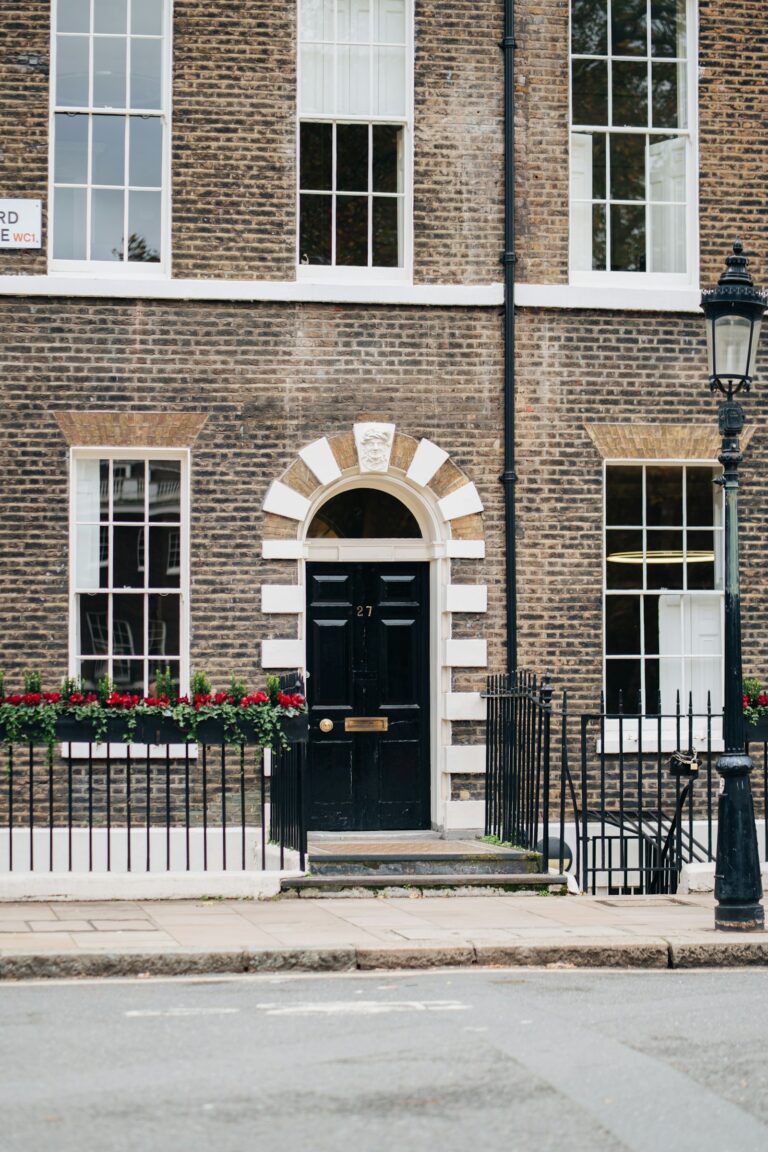
A sash window is a window made of one or more movable panels, called sashes, that slide up and down (or sometimes sideways) inside a frame. They are one of the most recognisable features of British Georgian, Victorian and Edwardian homes, and they are still made today in both timber and uPVC.
What is a sash window?
The word “sash” simply means the glazed panel that holds the glass. In the most common type, the double-hung sash window, there are two sashes: an upper one at the outside and a lower one at the inside. Each sash slides vertically in its own channel, so you can open the window at the top, the bottom, or both.
Opening both a little is one of the clever things about sash windows. Warm, stale air escapes at the top while cooler fresh air comes in at the bottom, which ventilates a room very effectively.
How does a sash window work?
Traditional box sash windows
In a traditional box sash, each sash is hung on two cords. The cords run over pulleys at the top of the frame and are tied to heavy weights hidden in hollow boxes on either side, which is why it is called a “box” sash. The weights balance the sash, so it stays open at any height and slides with little effort.
The main parts are:
- Sashes: the upper and lower glazed panels
- Meeting rails: the horizontal bars where the two sashes meet in the middle
- Box frame: the outer frame, with hidden boxes either side for the weights
- Pulleys, cords and weights: the counterbalance system
- Staff beads and parting beads: thin strips of timber that hold the sashes in their channels
- Sill: the bottom of the frame, sloped to shed rain
Spiral balance sash windows
Spiral balance windows do the same job without weights. Instead, a spring-loaded spiral balance is fitted in a groove on each side of the sash. Because there are no weight boxes, the frame can be slimmer, which makes them common in newer homes and some replacement windows. Many spiral balance windows can also tilt inwards for cleaning.
Types and styles of sash window
- Georgian (around 1714–1830): small panes divided by slim glazing bars, typically six-over-six. Glass was expensive and could only be made in small sizes. Read more about Georgian windows.
- Victorian (around 1837–1901): larger panes, often two-over-two or one-over-one, with “horns” on the upper sash to strengthen the joints. See our Victorian sash windows guide.
- Edwardian (around 1901–1910): often a multi-pane upper sash above a single-pane lower sash.
- Yorkshire (horizontal sliding) sash: sashes slide sideways rather than up and down, common in cottages and northern England.
- Bay windows: several sash windows set at angles to form a bay.
Timber or uPVC?
Traditional sash windows are timber, and timber remains the best choice for period homes, listed buildings and conservation areas. Modern timber sashes can be double glazed and made from durable woods such as Accoya. uPVC sash windows are cheaper and need less maintenance, but they usually look less authentic and may not be allowed on listed buildings or where an Article 4 direction applies. See our planning guide.
Pros and cons of sash windows
Pros:
- Classic look that suits period homes and adds value
- Excellent ventilation when opened at top and bottom
- Do not swing out, so they are safe next to paths and balconies
- Traditional timber sashes can last well over 100 years with care
- Can be repaired, draught-proofed and double glazed
Cons:
- Older sashes can be draughty and rattle (this is usually fixable, see how to stop draughts from sash windows)
- Cords can break and need replacing
- Timber needs repainting every 5–8 years
- High-quality replacements are more expensive than standard casement windows
Looking after sash windows
Regular painting, keeping the pulleys clear, replacing worn cords and fitting draught-proofing will keep most sash windows working for decades. Find out more in our guide to sash window repair, or see how to replace a sash window cord.
FAQs
What is the difference between a sash and a casement window?
A sash window slides up and down (or sideways), while a casement window is hinged at the side, top or bottom and swings open.
Why are they called sash windows?
“Sash” comes from the French word “châssis”, meaning frame. It refers to the glazed panel that slides in the frame.
Can sash windows be double glazed?
Yes. Slim heritage double glazing and vacuum glass can be fitted to new or existing timber sashes. See our double-glazed sash windows guide.
How long do sash windows last?
Well-maintained timber sash windows can last over 100 years. Many in Georgian and Victorian homes are still original.
